Showing posts with label writing. Show all posts

A Writer's POV: Does Listening to an Audiobook Really Count as Reading


I love books.

I love the feel of them, the smell of them, the ridiculous number of them stacked around my house, and the way I can tell myself I absolutely need another one even though there are already several waiting patiently to be read.

But I also love audiobooks.

And apparently, that can be controversial.

Mention that you “read” a book on Audible or Libby and, sooner or later, someone will say:

“But you didn’t actually read it. You listened to it.”

Well.

Yes.

Technically, my ears were involved. But does that mean I didn’t experience the book?

That question sent me down a research rabbit hole, and what I found was much more interesting than I expected.

The short answer is this:

Listening to an audiobook and reading a printed book are not exactly the same thing—but when it comes to understanding a story or absorbing information, they are much more alike than many people realize.

And yes, I am firmly in the camp that audiobooks count.

What Are We Really Talking About When We Say “Reading”?

Part of the problem is the word itself.

When we think of reading, we picture someone sitting with a book, eyes moving across the page.

And certainly, that is reading.

Our brains recognize letters, turn those letters into sounds and words, and then make meaning from them.

But the meaning part matters.

A lot.

Literacy researchers often describe reading comprehension as a combination of decoding and language comprehension.


Decoding is the ability to look at printed words and figure out what they say.

Language comprehension is understanding what those words actually mean.

An audiobook takes away most of the decoding work.

The narrator does that part for you. But your brain is still busy doing everything else.

You still have to follow the story.

You still have to remember who is related to whom—which, if you happen to be listening to an epic historical novel with eighteen cousins and three men named William, is no small task.

You still have to understand vocabulary, recognize sarcasm, notice clues, make predictions, infer what a character is feeling, and connect what is happening now to something that happened six chapters ago.

In other words, your brain is not exactly lounging around while the narrator does all the work.

The Research Is Actually Pretty Fascinating

A large 2022 review looked at 46 studies involving more than 4,600 people and compared reading comprehension with listening comprehension.

The overall finding?

There was not a significant difference between the two.

People generally understood what they were reading and what they were hearing at similar levels.

That does not mean the experiences were identical.

Print sometimes had an advantage when readers needed to slow down, reread something complicated, or make deeper inferences.

And that makes complete sense.

With a book, you can stop. Go back. Read a sentence again. Stare at it. Read it one more time.

Wonder why the author decided to make things unnecessarily complicated.

Then continue.

With an audiobook, the narrator keeps happily marching along unless you reach for the rewind button.

Still, the overall research suggests that listening comprehension can be remarkably similar to reading comprehension.

And neuroscience gives us another interesting piece of the puzzle.

Researchers at the University of California, Berkeley studied brain activity while people either listened to language or read it.

They found that the brain processed the meaning of the language in strikingly similar ways regardless of whether the words entered through the eyes or the ears.

That is the part I find especially interesting.

The book may enter your brain differently.

But once the story gets there? Your brain starts doing many of the same things with it.

Which Explains Why an Audiobook Can Completely Wreck You Emotionally

If you have ever listened to a really good audiobook, you already know this.

You are driving peacefully down the road.

Everything is fine.

Then a character dies.

Or someone finally admits they are in love.

Or the dog gets old.

Suddenly you are crying at a stoplight while the person in the car next to you is desperately trying not to make eye contact.

Your brain does not seem particularly concerned that you did not physically turn the page.

You were in the story.

That matters.

Another study compared adults who read an e-book, listened to an audiobook, or did both at the same time.

Researchers tested them immediately and again two weeks later.

They found no significant differences in how well the groups remembered the material.

Again, that does not mean every book or every reader will have the same experience.

A dense science textbook is very different from a novel.

But it does make it harder to argue that audiobook listeners somehow aren't retaining anything.

Why I Sometimes Prefer Audiobooks

There are simply times when an audiobook works better.

I cannot safely read a paperback while driving.

Apparently, society has rules about these things.

But I can listen to one.

I can also listen while walking, cooking, folding laundry, exercising, cleaning the house, or doing any number of other things that would normally make reading impossible.

And honestly?

Sometimes a narrator makes a book better. Julia Whelan anyone? 

A wonderful narrator gives characters personality.

They give you accents, timing, emotion, humor, and pauses that completely change how a scene lands.

Historical fiction can be especially fun this way because suddenly all those Scottish place names I have been confidently pronouncing incorrectly in my head have actual pronunciations.

Audiobooks can also make books more accessible.

For someone who struggles with decoding, has dyslexia or another print disability, is learning a language, or simply gets tired reading large blocks of text, audio can open the door to books that might otherwise feel out of reach.

And I am very much in favor of anything that opens more doors to books.

There Is Even Evidence That Audiobooks Encourage More Reading

This was one of my favorite things I found.

Research from the National Literacy Trust found that many children and young people who listened to audiobooks said the experience actually increased their interest in reading.

More than half of audiobook listeners surveyed said audiobooks had made them more interested in books.

That matters.

Especially when we are talking about reluctant readers.

Sometimes the problem is not that someone hates books.

They just have not found the right way into them yet.

Maybe that doorway is a graphic novel. Maybe it is romance. Maybe it is fantasy.

Maybe it is listening to a fabulous narrator tell them a story on the bus ride home.

Once someone discovers that books can be wonderful, I am not terribly interested in policing the format they used to get there.

But Print Still Matters

This is the part where I make the print-reading people happy.

Because they are not wrong either.

Reading a printed book gives you something audio does not.

You control the pace.

You can reread a paragraph in seconds.

You can underline something.

Write in the margin.

Flip back to Chapter Three because you suddenly realized something important in Chapter Twelve.

You can see how a word is spelled.

You can notice paragraph structure and punctuation.

You can quickly scan a page for something you missed.

Those things matter.

And they matter tremendously for children who are learning how to read.

A beginning reader needs actual time with print.

They need to connect letters with sounds. They need to recognize words. They need to practice decoding until it becomes automatic.

An audiobook cannot do that job for them.

It can help build vocabulary and comprehension. It can expose them to richer language and more complicated stories.

But it should not completely replace reading print.

For developing readers, I think the best answer is often not audio or print.

It is audio and print.

Sometimes I Want the Book in My Hands

There are also books I simply prefer to read.

If I am reading something complicated that I know I will want to underline and come back to later, I usually want the physical book.

If there are maps, photographs, charts, recipes, or diagrams, I definitely want to see them.

And there are some books where I just like turning the pages.

There is something wonderfully slow about sitting with a book when nothing else is demanding your attention.

No multitasking.

No folding laundry.

No GPS interrupting the most important scene in the entire novel with, “Turn left in 500 feet.”

Just the book.

I love that too.

So Does an Audiobook Count?

I think we sometimes get far too caught up in deciding what counts as “real” reading.

Hardcover is better than Kindle.

Literary fiction is better than romance.

Classics are better than mysteries.

Print is better than audio.

And meanwhile, everyone could simply be enjoying their books.

If a child needs to learn how to decode words, then yes, they need print. If a student needs to analyze the structure of an essay, they probably need to see the page.

But if two people finish the same novel—one reading the hardcover and one listening to the audiobook—they both know the characters.

They both followed the plot. They both noticed the clues. They both formed opinions about the ending. They can both argue passionately about whether the hero deserved forgiveness.

One used their eyes.

One used their ears.

Both experienced the book.

And I am perfectly comfortable calling both of them readers.

Because for me, reading has always been about more than turning pages.

It is about stories, ideas, imagination, and curiosity.

Learning something you did not know before.

Falling in love with characters who do not actually exist and then missing them when the book is over.

If an audiobook gives someone all of that, I am not going to tell them it does not count.

In fact, I may ask what they are listening to next.

A Little of the Research Behind This

Clinton-Lisell, V. (2022). Listening Ears or Reading Eyes: A Meta-Analysis of Reading and Listening Comprehension Comparisons. Review of Educational Research. This analysis examined 46 studies involving 4,687 participants and found no overall significant difference between reading and listening comprehension.

Deniz, F., Nunez-Elizalde, A. O., Huth, A. G., & Gallant, J. L. (2019). The Representation of Semantic Information Across Human Cerebral Cortex During Listening Versus Reading Is Invariant to Stimulus Modality. The Journal of Neuroscience. Researchers found substantial similarities in how the brain represents meaning during reading and listening.

Rogowsky, B. A., Calhoun, B. M., & Tallal, P. (2016). Does Modality Matter? The Effects of Reading, Listening, and Dual Modality on Comprehension. SAGE Open. Participants who read, listened, or did both showed no significant differences in comprehension or later retention.

Moore, J., & Cahill, M. (2016). Audiobooks: Legitimate “Reading” Material for Adolescents? School Library Research. The review discusses the role audiobooks can play in comprehension, vocabulary, motivation, and access to literature.

National Literacy Trust. Children, Young People and Audiobooks. Research found that audiobook listening was associated with reading enjoyment and that many young listeners reported that audiobooks increased their interest in reading.

A Writer's POV - Keep Them Hooked: Writing Page-Turning Moments Like a TV Show


Yes, I know in the world of streaming, some may think the commercial break is old school. However, streaming services are now charging to remove commercials--so here we are--old school is new school.

If you’ve ever yelled “Are you kidding me?!” at your screen when a show cuts to commercial right as something big is about to happen… you already understand one of the most powerful storytelling tools available to you as a romance writer.

Television has mastered the art of the strategic interruption—and it’s exactly what keeps viewers glued. The good news? You can use the same technique to keep readers flipping pages deep into the night.

The “Commercial Break Effect”


Think about an episode of NCIS. Right before a commercial break:

  • Gibbs discovers a crucial clue

  • A suspect runs

  • A gun is raised

Cut to black.


Or in Grey's Anatomy:

  • A confession is about to happen

  • A patient flatlines

  • Two characters lock eyes with everything unsaid

Cue dramatic music… then ads.


Even comedies like Friends or Brooklyn Nine-Nine use this:

  • A punchline is almost delivered

  • A character is about to reveal a secret

  • Chaos is just beginning

Cut. Wait. Come back. Payoff.

The goal is simple: create irresistible curiosity at the exact moment tension peaks.


Why This Works (And Why Romance Needs It)

Romance thrives on emotional tension—will they, won’t they, should they, can they survive this?

But here’s the truth:

Readers don’t turn pages because things are happening.

They turn pages because something is about to happen.


That “almost moment” is your version of a commercial break.


How to Use This in Romance Writing

1. Cut at the Peak—Not After the Resolution

Don’t write the kiss… and then end the chapter.

End it right before:

  • His hand cups her face

  • She realizes what she’s about to do

  • He says her name like a promise

Cut. New chapter.

2. Interrupt Emotional Vulnerability

Romance readers crave intimacy—but anticipation makes it powerful.

Instead of:

“I love you,” he said.

Try:

“I—” His voice broke.

She leaned closer. “What?”

He swallowed. 

Chapter End.

Cruel? Yes. Effective? Absolutely.

3. Use Physical Action as a Trigger

Borrow directly from shows like NCIS:

  • A door bursts open

  • A letter is discovered

  • A rival appears

In romance, this could be:

  • The ex walks in

  • A secret is uncovered

  • A betrayal is about to be revealed

End the chapter at the moment of impact, not the aftermath.

4. Leverage Dual POV for Maximum Tension

This is your secret weapon (and you already use it beautifully).

Example from The Thistle and The Rose (soon to be released!):

  • End Claire’s chapter as she’s captured

  • Switch to Lachlan—who doesn’t know yet

Now readers are screaming internally:

 GO FIND HER!

That emotional gap = page-turning fuel.

5. Delay the Payoff (Just Enough)

TV shows return from commercials and stretch the moment before delivering.

You should too:

  • Let the tension simmer

  • Add sensory detail

  • Slow time

But don’t delay too long—you’re teasing, not torturing.


Romance-Specific “Commercial Break” Ideas

Use these moments to end chapters:

  • Right before a first kiss (or forbidden one)

  • Just as a truth is about to be revealed

  • When desire becomes undeniable—but not acted on

  • When danger collides with intimacy

  • During a quiet, vulnerable confession that gets interrupted

  • When one character realizes something the other doesn’t


Example (Romance Style)

Instead of this:

Lachlan pulled her into his arms and kissed her, finally giving in to everything between them.

I changed it to this:

Lachlan’s hand slid to the back of her neck, fingers tightening just enough to steal her breath.

Claire didn’t move. Didn’t dare.

His gaze dropped to her mouth.

“If I do this,” he murmured, voice rough, “'tis no turning back.

She should have stepped away.

She didn’t.

His lips hovered—

And then—

Chapter break.


Final Thought: Make Them Need to Know

TV writers understand something powerful:

The audience will wait through commercials if theneed the answer.

Your readers will turn the page if:

  • The emotional stakes are high

  • The moment is unfinished

  • The question is urgent

So the next time you finish a chapter, ask yourself:

“Am I ending this scene… or am I cutting to commercial?”


Because the difference?

  • One closes the book.
  • The other keeps them up until 2 a.m.


To change my genre or not to change! By Madelyn Hill


As a writer, I’ve always been drawn to research—the thrill of discovering forgotten details, the way a single historical fact can ignite an entire plot. History has always felt like a living thing to me, breathing color and texture into the stories I create. Melding real historical elements with the characters who wander into my imagination has long been my favorite part of writing. It’s where my voice found its home.

But sometimes characters arrive who don’t belong in the centuries they usually inhabit.


What happens when a historical writer feels called to create something new?

A few years ago, I started hearing a different kind of whisper that
grew into a shout—not from the rugged Highlands or Highlanders or centuries-old castles, but from characters who didn’t belong in any century I’d written before. Their stories were modern, sharp-edged, a little messy, and full of potential. I tried to push them aside, force myself to continue working on my latest Scottish historical, but they stayed. They grew louder. And eventually, I realized I wasn’t just dabbling in a new idea—I was shifting genres entirely.

That realization brought equal parts excitement and fear. I wondered how readers would respond. Some have followed me from book to book because they connect with my voice, not just my settings, and I’m grateful for that. Others adore historical romance specifically, and I understand the hesitation: “Will this feel the same? Will the magic still be there?”


The honest answer is yes—and no.

The backdrop may change, but the heart of my storytelling hasn’t. I still build characters who feel deeply and love fiercely. I still chase emotional truth, tension, and connection. I still obsess over details—just not the kind found in 17th-century archives.

And I also know this; shifting genres doesn’t mean leaving readers behind. Some will continue the journey. Some may pause and wait. And some new readers will discover me for the very first time.

Creative growth is a sign of a living writer. Stories call to us from where they exist, whether rooted in history or sparked by the present. My joy is simply to follow.


I am wrapping up my Endeavor series and can't wait to get it readers.  

Here's a quick pitch - Three sisters. One curse. A town full of magic. The series is about choosing love even when fate—and fear—say run.

p.s. I'm not giving up on my Highlanders! Their story will be written. 


Constantly Learning the Craft


As a writer, I feel you need to constantly work on your craft. There are numerous ways to do this and each author works differently, however here are a few of my methods for being a life long learner.

Listen to your editor: For my first novel Wolf’s Castle, I accepted ALL of the comments, grammar, and structure recommendations. With For The Love Of A Gypsy, much of the same, but I also discussed a few of the changes, and now wish I'd pushed for more discussion. For Heather In The Mist, there weren’t as many line edits, however more of plot questions from the editor and I made huge changes and sent back first edits with a very different book. In my opinion, the comments from the editor helped me re-evaluate what I had and with a cold eye I cut those darlings.

Read, read, and read some more: A writer has to be a reader. I know some authors who do not read any books written in the genre they write. I can see the logic behind this. I, however, read everything and anything. This includes books, magazines, and newspaper (online and the old fashion paper ones) articles. You never know where inspiration will strike. Although I am a historical writer, a contemporary situation may influence my story, something I can tweak to make it historically relevant.

Craft Articles: I haven’t been to conferences in a few year, but in the past I did enjoy going to writing classes and attending workshops. Over the summer I read a ton of articles on the writing craft. I searched them out and read them one after another. As a tech geek, I decided there has to be a better way, so now I use the RSS feed to have articles funnel to my Twitter feed. Now I can look at articles from several writing blogs. 


Here are some of the articles I recently read:


There are so many intelligent voices out there in blog land and I like the various topics that range from conflict to characterization to social networking for authors. All tools to add to my writer toolbox!


What do you do to keep perfecting your craft?

The Right Ingredients

I love to cook and bake. I scour cookbooks, watch cooking shows, and stalk Pinterest for new and exciting recipes to try out on my family. While most have been successful, there have been some that I'll never attempt again. The main reason a recipe doesn't work is because you do not follow the it. Another reason, you just don't have the right ingredients or the right ratio of ingredients.

As with cooking, writing needs the right ingredients in order to create an engaging story with compelling characters and strong conflict. I think we can all agree the five needed elements or ingredients to a story are Character, Setting, Plot, Conflict, and Theme. But there are also the spices and seasoning needed to enhance a story.

In regards to Characters, you need to hone your voice and know your genre in order to create the right
From http://victoriaoldham.wordpress.com
type of character. Think about Harlequin Presents - the hero is a super alpha male. This type of hero would not work with Love Inspired, just as hot pepper wouldn't work vanilla cake. Each Character needs to have GMC (Goals, Motivation, and Conflict). If a Character does not have these elements, they will not ring true to the story or plot, their actions and reactions will not be internally driven. GMC can change and shift -- thus the Character Arc.


The Character Arc is essential to a character just as milk is essential to ice cream, as ground beef is to
From http://victoriaoldham.wordpress.com
a hamburger. Each main character and sub characters, if the plot dictates, experiences an Arc. Your characters meet, mix together, sense an attraction, their conflict causes the climax, and resolution. In cooking terms, I've mixed all of the ingredients, some may have been a little tricky (think souffle) and when all is done, there is the satisfaction as the characters have faced the differences, conflicts, keep them apart and they profess their undying love.

As we plot our story, there needs to be pacing and the ebb and flow of the story, much like a sound wave when there is the rising action, climax, and resolution. As the plot begins to simmer, characters meet, create a relationship. The internal and external conflicts flavor each action and reaction. We still need to nurture our characters much as we'd baby a souffle to ensure they are true to the story, themselves, and readers will be drawn to the characters, believe in the characters.

Conflict drives a story, drives a characters thoughts, actions, reactions and dialogue. Conflict needs to be strong, full of spice in order to have a reason for the characters to be in the story. Each of the main characters has to have an internal conflict or else there wouldn't be a reason for the characters to be apart, there wouldn't be a reason for the characters to fight to be together. External conflict adds another layer, just as you build a cake, you have a layer, add the frosting, add another layer, then another layer of frosting.

Setting seems to be the easiest part of the story, especially since the internet has arrived. Obviously, you need to determine the correct setting for your genre and story. Just as you need to determine what side dishes will accompany the main dish, which wine, and what type of dessert. There are aspects of a story that needs to be a historical, just as there are elements of a story or plot and character that dictate the need for the story to be a fantasy or contemporary.

Theme is important, but the part I truly think of the least when I write. Recently, someone asked me the theme of my novel Wolf's Castle. To be honest, as I was writing the story I may not have been able to answer, but now I know it instantly. Not every story will have a theme just as the theme should not be preaching at you during the story.

And as with many recipes, a good, full bodied wine is recommended!

That's it according to Maddy~

Tootles~
Madelyn

Writing in the 21st Century

Just finished reading - The Boldest Man in Ballymuir and The Boldest Flame in Ballymuir by Dorien Kelly

I was watching Little Women (the one with Winona Rider) and I marveled at how easy (in some ways!) writers have it today. Jo wrote each manuscript by hand, her fingers were stained with the ink of a fountain pen, and as a woman, she faced discrimination and scrutiny.

Now we have computers that not only help with the writing process, but research, marketing, communication, and design. Websites, twitter, facebook, and book trailers are awesome tools to spread the word about writing and books.

Some technology tools I love?
Old writing technology
Computer (obviously)
Email
Twitter
Facebook
Websites
Dragon Dictation (app)
IFTTT - feeds website update to facebook/twitter
Pinterest

There are so many that are daily habits, that I'm sure I'm missing many. What is great is they make our job easier, just think of research and how much easier it is to gather facts and ideas and communicate with experts.

That's it according to Maddy~

Tootles~
Madelyn

National Girfriends Network Day

Let's face it, some people think poorly of romance novels. However, what I love about romance novels are the strong heroines.  When I think of role models,  I think of real people, but also, I think of some of my favorite literary heroines. 

Today is the first annual National Girlfriends Network Day.  Why would there need to be such a day? According to the news program I watched this morning, women do not have the strong professional networks that men have. Women are relatively new to the workforce in the scheme of things.  Men are expected to go to work from birth whereas women may go to work for various reasons.

Another aspect of the National Girlfriends Network Day is that there are fewer strong, female role models in the workplace.  The statistics show how there has been a reduction from already low numbers of women in leadership positions in the workplace and government.

Why do I bring all of this up? First, I found it interesting. Secondly, I have two daughters whom I like to think are strong, intelligent individuals.  Thirdly, the role models out there are slim pickings.  Today's fascination with reality television has diluted the strong female leadership in America.

Today's kids list actress and reality show star as their future profession.  How sad is that?  As I think back to some of my favorite role models while growing up there was Amelia Earhart, Goldie Meyer, and Eleanor Roosevelt.  Strong women who accomplished amazing feats.  Then there are my literary role models and heroines - Jane Austen, Any of the Brontes, Clare from the Outlander Series, Kit from the Witch on Black Bird Pond, even Madeline from books about the French orphan.  All characters who have had a lasting impression on me, my reading habits, and even how I write.

Laurel Ulrich said, "Well behaved woman rarely make history" - I love this quote!

A little long winded, but That's it according to Maddy~

Tootles,
Madelyn

Researching!

I was doing some additional research for my current Scottish historical and stumbled upon the perfect place for my heroine to "hide".  I had a picture in my mind, but wanted to check the geography of the region (north east Scotland).  Amazing how my imagination closely matched what I found.
I love stumbling upon great images and factual tidbits. You just never know where you may use it in a story, but it's nice to tuck away for later use. These caves are perfect for my story and I can't wait to write the scene(s).
I also needed some flora and fauna information. We all know about the Scottish thistle, heather, and lavender.  I needed so deep details, more specific to a region. I was surprised to learn about some of the trees that grew in the area which seems a little bleak to even allow anything to take life.
I was pleased to learn about the bottle nose dolphin that populates the waters shown in the picture.  Moray Firth is swimming (sorry the pun) with them and I love the dolphin and will love to pull some into my story as well.
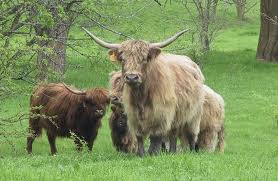
And who couldn't love the Highland Cattle (Gaelic: kyloe)? They are so cute and furry that I would love to have them in the back yard.  My husband said no. He didn't even hesitate, just no!  And I'm sure my dog would have heart failure at the huge beasties roaming her territory.

Website Down!

Hello,

I've tweaked my blog a bit because my website is undergoing construction and I've no where else to share writing news. I'm nearly done (finally!) with Hope, Book 1 in the Wild Thistle Trilogy. This book is truly the book of my heart. I love the characters, setting and plot. The heroine is one of the strongest I've written and I love writing her. And the hero, I must say is sexy, strong, and loves to tangle with the heroine.

Once I give the book one more run through, it's off and running. Wish me luck!

Tootles~
Madelyn

When Writing

When I write, I am sometimes focused and sometimes scattered. And when I'm scattered, it is so frustrating. I will write a few paragraphs, then become distracted by email, or searching the net, or check out facebook. Sometimes I wonder if I should have a laptop dedicated to writing and keep it bare bones--without internet access. (I have to admit, this makes me nervous)

Then I talk myself out of cutting out the net. Let's face it, I need it to do research, check facts, and search for submission guidelines, contest, and other authors.

So, I have to constantly work on keeping focused. I have remind myself that focused = better work. Focused = complete work. Focused = submitted work.

So I guess I'll have to stop writing while watching the latest reality show, talking with the kids, playing Sorority Life on Facebook, and checking my status?!?!

That's it according to Maddy~

Tootles~
Madelyn

The Essense of a Good Story

To me characters are the backbone and meat of a good story. No matter the plot, setting, conflicts or resolutions, if you don't have good--no, great characters, forget it--I tune out. Think of characters as the meat and potatoes. Without those staples, substantial aspects, then your story is not going to engage the reader.

There are many books I have read and because I loved the characters, some of the plot problems weren't as important. Think of some of books you have read. Think of some of the popular stories that may not have great writing or strong plot, but those characters really get under your skin and hopefully into your heart.

I recently read a book in which I kept saying, "Why would he do that? That's not him! Why doesn't she just talk to him? That is soooo out of character!" I did not buy the plot because the people moving it forward failed in their role--failed to engage me as a read--failed to make me care what the heck happened to them.

There are classic characters--some of my favorite are Kit (From the Witch of Blackbird Pond), Jamie and Clair from the Outlander Series), Most Shakespeare characters, Any Jane Austen character, how about Stephanie Plum? I could go on for pages.

Like I said, these characters are so well written that they come alive, we think of them as our friends, we sometimes talk about them as if they are real (Harry Potter, Team Edward, Team Jacob). We love and hate these characters, but the most important factor is that we feel, we are emotional draw and/or entangled with these characters.

So, share some of your favorite characters--and tell me why they are.

That's it according to Maddy~

Toodles~
Madelyn

Food for thought

"If you don't go after what you want, you'll never have it. If you don't ask, the answer is always no. If you don't step forward, you're always in the same place." ~ Nora Roberts

Think about this quote. It is so, so true. As an educator I interact with students who allow their fear of rejection to stop them. Not only does this stop the emotional growth, but future potential. Just think of all of those people who had great ideas and didn't let their fears stop them. I immediately think of Eistein, Columbus, Davinci, Fleming, and Salk (and there are so many more). If they had stopped the first time they heard no, or didn't go after what they wanted, then were would human race be?

A comfortable place is not always the best place. As a writer, we are told to write what we know, but sometimes we have to step out of that comfort area. And a lot of times, we find a new level of brilliance.

So today, I'm not going to sit in my comfort zone. I will take a step forward and challenge my usual thoughts and actions.

How do you get what you want? How do you stop your fears from stopping you?

That's it according to Maddy~

Tootles~
Madelyn

Series versus Single Title

Do you like reading a continuing series? Or do you like reading one book and being done with it?

I love continuing series. There are several that I wait and wait for the next one to come out. Some of my favorites are Adriana Trigiani, Big Stone Gap Series, Very Valentine Series, and Nora Robert's, Bed of Roses Series are some of my favorites.

And of course there are the Harry Potter and Twilight Series. I love these books and waited for them to be delivered by my faithful mailman.

Of course there is a downside to series. Waiting for the next book to be written, published, and released can take forever. And some writers have a hard time keeping the series fresh and the characters engaging.

Here's a list of my favorite series that I often go back and read again and again:
Evanovich's Stephanie Plum Series
Jan Karon Mitford Series
Lisa Kleypas' historicals
The Outlander Series

Share some of your favorites! I love to hear what others are reading.

That's it according to Maddy~

Tootles~
Madelyn

New Year's Resolutions Anyone?

Okay, it's that time of year when everyone starts making New Year's Resolutions. I saw some postings on Facebook of people pre-planning their resolutions and I started thinking about what I would pledge this year.

There are the constants: lose weight (got rid of all the junk food), exercise more (I've joined the Y), etc. But I wanted to dig deeper, really think of things that not only matter to me, but to my family as well.

This year I really want to be more patient, less critical. I want to be more accepting and relaxed. I want to address laundry before it gets to the point no one has clean underwear. So I have taught the kids how to do laundry.

So those ideas have been added to my list and I'll add some more, less Facebook and more writing. Less surfing the net and more writing. Basically, more writing, writing, writing.

What are some of your resolutions? And what are you doing to make sure you stick to them?

Toodles for now~

Madelyn

The Inspiration of Fall

I love fall. I love the scent of the cold, crisp air, wearing sweaters, camp fires. I love it all up until the snow falls. In western NY we get a lottttt of snow. Too much snow. Heaps and heaps of snow.

But I digress. I love fall and this fall I have sent out 3 short stories, received 2 rejections (but good ones--writers know there is a difference and one even had hand writing to keep sending). So all in all, not too bad.

I'm also continuing my new young adult romance and I'm really excited about it. The research, listening to young adults talk, and making sure each sentence zings. The pacing is a new element and I'm really learning.

My interest in young adult novels started while I completed my Master's Degree in English Education. A semester full of YA novels, creating lesson plans around such novels, and enjoying the classics. (Remind me to tell you about my time spent with Shakespeare). Dissecting a YA novel through the lens of an educator is one thing, but writing it so the teen lens likes it is another.

So, wish me luck and my latest read was "Read My Lips" by Teri Brown. Very nicely done with great characters and some really unique circumstances.

My latest adult read was Nora Robert's "Bed of Roses" part two of the Bride Quartet series. Lovely book and I'm speechless at all of the detail that is so naturally done. I can't wait for the next book in the series.

Feel free to share what you're reading!

That's it according to Maddy~

Tootles,
Madelyn

Writing to a schedule

Writing is a very solitary task, when writing one can be lonely. That's why I find it so hard to write in the evening and my kids are running around and having fun. I stare at the computer and hear them and think, "What am I doing?". So I go and spend time with my family. But then my writing has suffered.

How do you find a happy medium? Unless I want to get up at 5am every day, then I'm going to have to reconcile the fact that writing will be slow in the summer.

Some writers I know bring their laptop to every event possible. They watch their child's soccer game while looking up between paragraphs and cheer. I just can't do that. For one, a lot of my social life revolves around my childrens' sporting events. The moms and dads are friends of ours and we use that time to catch up and talk. It's fun and I'd hate to miss out on it. What's a writer to do?!?!?!

Sorry for the rant! I'll try to do better next time. Just finished a great book, For Love and Cheesecake, by Misty Simon is a funny and entertaining read. And sadly, this is the conclusion of the Ivy Mystery novels.

That's it according to Maddy~

Tootles,
Madelyn

First Person vs Third Person

What do you think about first person versus third person books? Do you feel strongly one way or the other? I find that I really like third person, write in third person, but then I think about my plots in first person.

One book that I feel does great with first person is Twilight. We really get the depth of Bella's character through first person use and I don't feel as if I'm missing out on Edward's point of view because the dialogue and action really captures his essence.

But mostly, I think traditionalist like third person, they like to be able to see the point of view of the hero, heroine, and sometimes the villain.

I'm starting a new story that I think will really work in first person, so I'll let you know how it goes.

That's it according to Maddy~

Tootles
Madelyn

Pass the Kleenex

I just finished a book in which the last quarter I was crying. Tears sloshed down my face and my nose ran. This has happened maybe twice that I can recall. Why did this book touch me so? The characters were drawn so well that I truly cared for them, felt empathetic to their plight and plain just wanted a "Happily Ever After" ending.

The book, The Friday Night Knitting Club does not sound like a book that would elicit tears. But the emotion and actions of the characters were so real that I had no problem buying into the story. To me, these people were real, my neighbors, friends, and relatives. In fact, I read the book slowly, which is unusual for me, but I wanted to savor every word and prolong the ending.

It seems as if this book is quite the phenomenon. There are several websites for the book such as Walker and Daughter in which a community of readers is created and there are many aspects of the book such as Dakota's Bakery that will remind you of parts of the story that were endearing and fun. The story is a work of fiction, however the way that each nuance is described, it is as if you could through the upper west side of NYC and pop in for a visit.

What is so fun for me is that this is a book that I wouldn't ordinarily choose to read. My time is precious, so much of my reading is done on a research basis, or saved for established authors that I know and trust. To me, stepping outside the box brought me a special present that will encourage me to search for that next extraordinary reading encounter with a little more patience and open-mindedness.

What have you read lately that has made you take a second look or think about for days? Have you stepped out of the box and into an imaginary world that has you so transfixed that you just don't want to leave?

That's it according to Maddy~

Tootles,
Madelyn

To Read Or Not To Read

Okay, I apologize for the title, but I'm a big Shakespeare fan and since I'm an English teacher, I should be. However, the subject of reading while trying to write is a tricky one. Should we read books that are a different genre then what we are writing?

If I am reading a historical and writing a historical, will the tone, ideas, and characterization seep into my writing? I tend to think not. Mainly because I feel that all authors have their own writing "voice". My tone would not mimic the other authors writing because if it did, wouldn't it be a carbon copy of the book? Also, many writers plan their plot, GMC, and characterization prior to writing and that helps direct them more than reading another book.

I do find reading books of the same genre I am writing beneficial because it tells me what editors have purchased and perhaps their manuscript personality. I may have in insight to a specific editors love of Pirates or Highlanders. Also, books do have a tone. Are they funny? Highly sensual? Or over-the-top dramatic? When searching for a publisher, these are all things to consider before submitting a book. I've done workshops on targeting your manuscript and truly investigating a publisher is important so you are not wasting your time or the editors time.

So, what is your opinion? Do you find it distracting to be reading and writing in the same genre?

That's it according to Maddy ~

Tootles,
Madelyn

Spring Fever

Well, spring is here and I for one am jumping for joy. I've been able to open the windows, do some cleaning, and put away all of those wool sweaters us in upstate NY tend to sport during the winter.

And, I've clean out some of my stories, edited a few, send out some queries, and started some novellas while still working on my latest historical.

I haven't published a story in several years and I'm itching to get something going again. For those of you who have expressed interest in my novella, Mended Promises, you can no longer purchase one through the publisher, but you can try to win one through my monthly contest publicized on my website.

That's it according to Maddy ~

Tootles,
Madelyn

Madelyn's Instagram